Why Human is the New Quality Signal in the Age of AI
Written by Kat Fletcher


AI is reshaping the world at a pace nothing before it has matched. The way people think. How they work. How they relate. What they want. What they buy. What they trust. The way businesses operate. The way brands get built. For premium and luxury founders, the ground has shifted in particular ways, and the path ahead is uncertain.
What will still feel special as AI keeps advancing? What does this mean for brands and customers right now? And what will it mean in 5 years from now?
Some of the shift is already visible. What used to signal premium can feel less special, because polished output has become easier to produce. Trust takes longer to earn, because people are questioning what is real. The signals customers respond to are changing.
AI is a powerful tool when used with understanding and discernment. Rather than fearing or ignoring it, I believe we’d do better to learn about it, harness it in the best possible way, and omit from it in the places AI cannot replace. One being our humanness. And so, this piece explores why human brands are becoming more valuable in this emerging new landscape, and what that means for premium and luxury brands.
The deeper truth
To understand why human brands are becoming more valuable, we need to go a layer deeper. As humans, we are wired for connection. We have evolved over thousands of years to seek out, recognise and respond to authentic human presence.
This is why a real conversation feels different from a scripted one. It’s why we can sense, often without realising it, when someone is being genuine and when they aren't. Or why we instinctively feel drawn to some people more than others. These are not learned responses. They are wired into us, from millennia of evolution. AI cannot undo the human desire for human connection, no matter how advanced it gets.
This is also, I would argue, not just a psychological matter but a spiritual one. A longing embedded within us to connect with others, because it’s why we’re here. It’s what makes life worth being alive for. It is the golden thread running through almost every kind of joy we experience.
In a world increasingly saturated with AI-produced content, that longing only grows. For brands, this is the deeper reason humanness matters. The longing doesn't switch off when someone’s shopping. It shapes which brands they are drawn to, which brands they trust, and which brands they stay with over time.
Trust is built two ways
People relate to brands like they relate to people. Whether they realise it consciously or not, they are always making a simple judgement when they encounter a brand: do I like you, and do I trust you?
Trust gets built two ways. The first is competence, most brands already understand this one. They signal it through a quality product, high level features and benefits, premium packaging, elevated design, photography, and positive reviews. These signal that the brand is good at what it does.
The second is warmth. Often underestimated, and yet fundamental to whether brand’s build trust at all. Warmth sits within the realm of: is this brand authentic, or does it feel performative? Are they for me, or are they just trying to sell to me? Do they actually care about who I am and what I want?
People trust brands that feel real, human and well-intentioned. Before they ever consider how good the product is, they are sensing whether the brand is worth trusting at all.
Most branding advice for brands at the premium and luxury level focuses on competence and underestimates warmth. The brands that build real trust have both.
Think of it like dating
Imagine going on a date with someone. They might look attractive, check all the right boxes on paper, and present themselves well. But if you don't really resonate with their personality, or they don't show you much of their depth, you’re probably not going to feel a connection. And without that connection, it probably isn’t going to last very long.
Connection is what makes us want to give someone more of our time, energy and attention. It is the gateway to trust. So if you want customers to give your brand more of their time, energy, attention, and trust, creating that connection is integral. It needs to be nurtured in every place the customer meets the brand, across the full experience.
AI is raising the stakes on trust
AI has made trust harder to earn. As polished-but-impersonal content saturates the internet, people are starting to question what is real. Was this caption written by a person, or generated? Was that photograph taken, or created from a prompt? Was that brand story born from truth, or put together from a strategic pattern? This questioning of what’s real is becoming a constant low-level filter in how people receive everything they see online.
People are becoming more discerning, more suspicious, more likely to disengage when they sense something has been generated without real thought (read: human thought). For brands, this means that trust becomes harder to earn, but even more valuable once earned.
At the same time, the rise of AI doesn’t just affect trust, it also changes how people perceive and decide what’s valuable.
What this means for premium and luxury brands
There will always be people who seek out that which is premium and luxury. That which feels special and different from the mass-produced norm.
For decades, that looked like the airbrushed model with pristine camera clarity. The perfectly rendered perfume bottle. The flawless aesthetic. These took skill, time, expensive equipment, and a specialist team to create. The fact that not everyone could produce them is what made them feel rare.
That kind of aesthetic is now becoming easier and cheaper to produce with AI, and it will continue to do so. The pristine polish that used to require a specialist team now sits more within reach of a prompt and a subscription. Which means it is losing its meaning as a premium signal. It is still aesthetic, still beautiful in its own way. It just no longer feels rare.
The premium signal is moving more and more to what AI cannot reproduce.
Humanness. The depth of a real story behind a brand. The texture of an original idea. Candid photography of moments that actually happened. Proof of values lived in practice. Human presence within the brand world. The behind-the-scenes. The slow craft. The integrity that holds across years of building.
In this new landscape, human becomes the quality signal. Human brands are not the soft-and-sentimental alternative to premium. They are the new premium.
What customers feel when a brand isn't human
Premium and luxury customers feel this more than the average consumer. They are paying more, their expectations are higher, and their intuitive feeling around a brand matters more. They have the discernment to sense when something feels off, and the willingness to step away when it does.
When they encounter a brand that feels impersonal, performative, or AI-generated, they respond in three ways. They zone out, because there is nothing real to anchor their attention. They perceive less value, because the brand starts to feel like one of many, with nothing to mark it as different. And they do not trust it, because the constructed expression reads as the brand not knowing itself well enough to be real.
When they encounter a brand that embraces the beauty of being human, and expresses its own human side, the opposite happens. They notice the brand. They take in its philosophy. They feel the truth in the story, the aliveness of the expression, the character that weaves through the whole of it. And in that recognition, they connect.
This is the nature of being human, applied to brands.
Two brands that do this well
PRESTESSE
Prestesse is a conscious fashion brand based in Paris. We collaborated with the brand last year, and since launching they’ve been featured in places like Ami Paris, Fashion Network, and Ouest France.
As we were building the brand for the luxury space, we knew it had to strike the right balance between aspirational and relatable. It had to convey a higher identity that people could step into, whilst also feeling like a world they could be a part of.
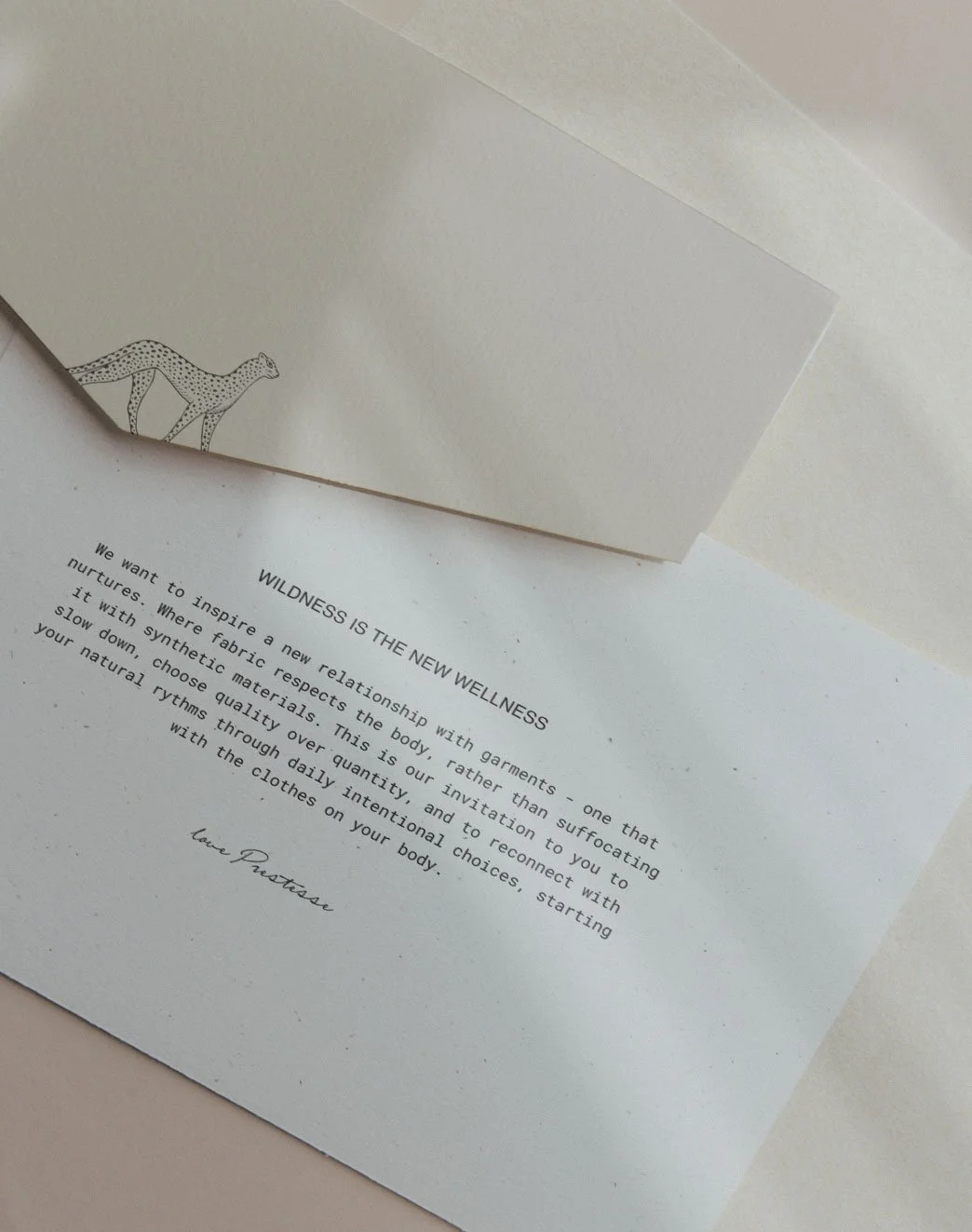
So we crafted a visual language that felt real and human. Hand-drawn logos, natural paper textures, approachable typography, all sitting within an elevated and refined aesthetic. Prestesse's photography doesn't feel overly polished or perfect. It shows real women, wild and embodied, still editorial and luxury.
The brand also shows where its garments come from. The materials, the design process, the making of each piece, the intention behind each collection. Coralie, the founder, speaks openly across the brand's channels and podcast conversations. She shares her story, her perspective on the fashion industry, and what she stands for. The values of sustainable, ethical fashion are evident in the materials chosen, the design decisions made, the way the brand carries itself.
The realness is in front of the customer. That is what allows Prestesse to grow as a conscious luxury brand that builds warmth, connection and trust, without the distance luxury so often creates.
See Prestesse here: https://prestesse.co
LE LABO
Le Labo is another example. The New York perfume house has built an entire brand world that is alive with human presence, while staying aspirational and refined.
Scroll through their Instagram and roughly three quarters of the posts feature a real human. A short video of a perfumer hand-formulating a fragrance. A photograph of hand cream being applied to an elegantly tattooed hand. A scene of a man opening the Le Labo on Wheels. Real people, continuously woven through the brand's expression.
The website contains the same feeling. The about page opens with a clear manifesto. Then videos of people working in the labs. There is a whole section dedicated to the craftspeople who shape the Le Labo world, with footage of them growing, harvesting, creating, and crafting.
The result is a brand that feels like an open hand, while still being aspirational through its excellence.
A note on balance
There is a balance to hold at the premium and luxury level. Leaning too far into humanness can tip the brand towards feeling overly relatable, like an every-gal brand that loses its aspirational quality.
Some mid-tier premium brands work brilliantly with high relatableness. Indigo Luna is an example. The conscious fashion brand has a strong community presence and UGC as part of its identity, and it works because the community itself is an integral part of the brand world, adding to the feeling of welcome, trust and belonging.
For brands positioning higher in the conscious luxury space, too much UGC can read as common. Too much vulnerability can read as oversharing. The aspiration that luxury customers look for can become diluted.
The right balance is unique to each brand. It is something founders need to decide in their brand strategy, then express consistently across the brand's identity, website, marketing and content.
To bring this together
In a world where pristine is becoming easier to produce and trust is becoming harder to earn, the brands that feel real are the ones people long for.
Beauty and leadership both live in the creation of human brands. Brands with character, spirit and depth woven throughout. The story, the voice, the photography, the aesthetic, the founder presence, the behind-the-scenes of the craft, the values made visible. All of it built from the centre and present in each part of the brand experience.
This is the move that distinguishes the brands that will define the next decade in the premium and luxury space. As AI continues to shape the world around us, the brands that hold steady in their humanness become the ones customers come home to. Human is the new quality signal, and the brands that understand this are the ones that will endure.
To learn more about branding as an energetic art, see:
The Brand Aura Effect: How Brands Develop a Natural Pull
Kat Fletcher
Brand Consultant
25 Questions from the Brand Roadmap: A selection of the most potent questions from our Brand Roadmap process, to inspire deeper thinking around your brand.